Pages

Monday, March 11, 2019

HOW TO MAKE YOUR OWN BEAUTIFUL CRYSTAL!!!

Aim: To learn about a saturated solution and how to make crystals

Definition of solution
A liquid mixture, when something is dissolved into a liquid (eg: sugar in water) 

Definition of saturated
Having or holding as much as can be absorbed of something (when no more sugar or borax can be dissolved into the water)


In groups of three you will make three different types of crystals and compare the results.

Borax Crystals

Image result for borax crystals

Ratio; 3 Tablespoons Borax per 1/2 cup water
Materials

1) A cup
2) Water
3) Popsicle stick
4) Borax
5) String
6) Warm water
7) Spoon

Process

Step 1: Grab a cup or glass
Step 2: Put 3 tables spoons of borax and 1/2 cups of water
Step 3: Add the ingredients to your cup or glass
Step 4: Mix all the ingredients together with a Popsicle stick
Step 5: Tie your string into a Popsicle stick
Step 6: Make a snowflake or a star with your pipe cleaner
Step 7: Put your star or snowflake into the borax and water solution

Sugar Crystals

Grow your own Sugar Crystals

Ratio: 1 cup sugar to 1/2 cup water
Materials

1) 4 spoons of sugar
2) String
3) A cup
4) Warm water
5) Popsicle stick

Process

Step 1: Get a cup
Step 2: Measure four table spoons of sugar into your cup
Step 3: Ask a teacher for a half cup of warm water into your sugar
Step 4: Mix the solution with your Popsicle stick
Step 5: Tie a string onto the middle of the Popsicle stick
Step 6: Dip the string into the water and rest the Popsicle stick across the cup


Salt Crystals
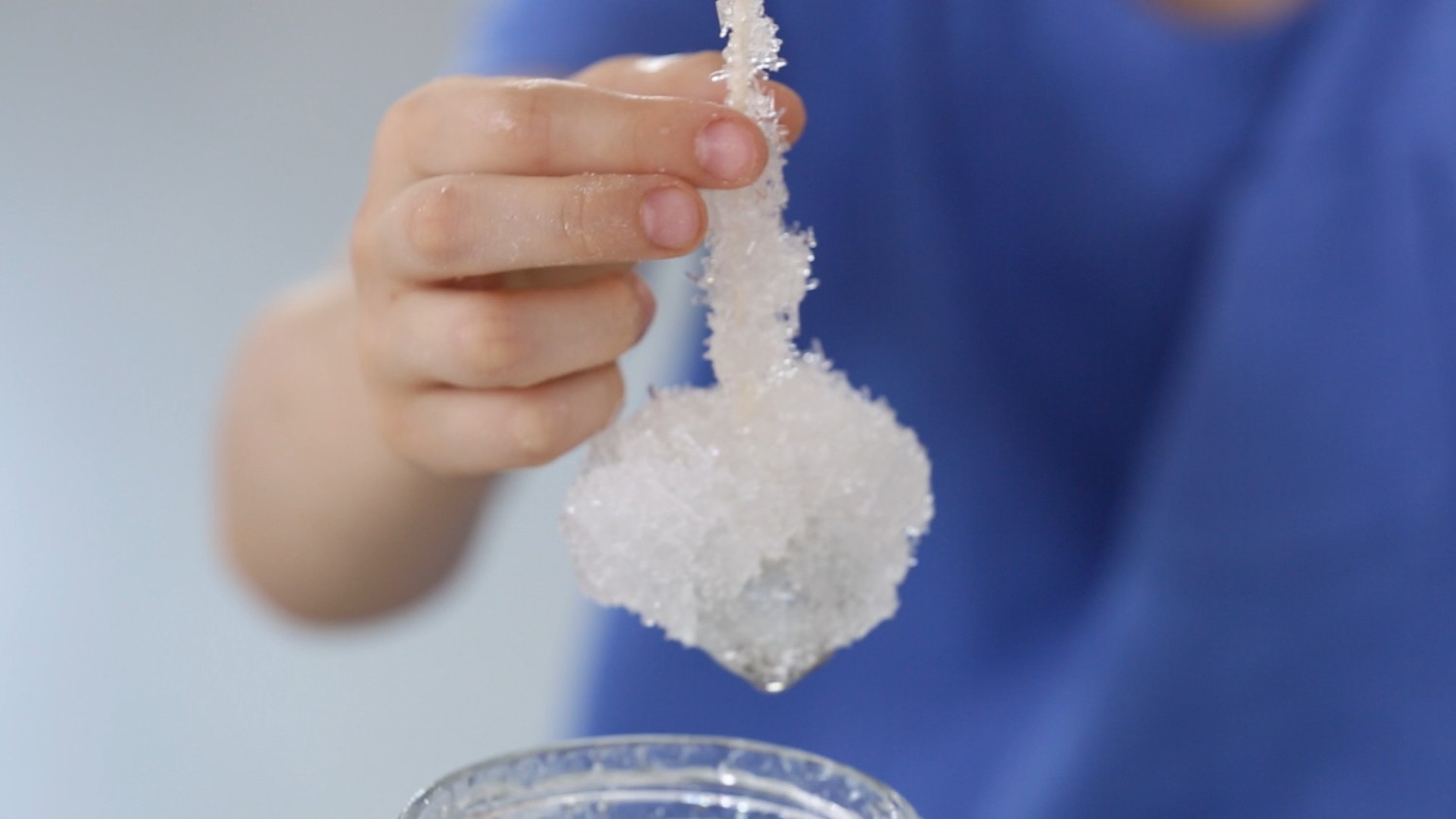
Image result for how to make salt crystals

Ratio: 4 Tablespoons salt to 1/2 cup water
Materials

1) Salt
2) Popsicle stick
3) A cup
4) Warm water
5) String
6) Spoon
7) 

Process

Step 1: Get a cup
Step 2: Measure four table spoons of salt into your cup
Step 3: Ask your teacher for some warm water into your salt
Step 4: Mix the ingredients together
Step 5: Tie a string into a Popsicle stick
Step 6: Dip your string in the water and rest your Popsicle stick across your cup


Findings

Describe your crystals in the table below.


Crystal Type
Shape
(Describe the shape)
Size
(of individual crystals)
Hardness
(Crumbly to Rock Hard)
Borax


No crystals formedNo crystals formedNo crystals formed
Sugar


LongSmallHard
Salt


Tiny ShardsTinyHard

What crystals worked out best and why?:

Conclusion:


After watching the videos as a class, explain how the following crystals are formed:


Type
Explanation
Salt
Sea wataer ponds sun evaporate salt


Sugar
Sugar Cane, Cut it up, Roll it/Squish, Get the juice, Heat it, Syrup, Crystallisation 


Snowflakes


CRYSTAL TYPES


AIM: TO LOOK AT THE 7 DIFFERENT TYPES OF CRYSTALS


Image result for salt crystal image
Salt Crystals

Image result for sugar crystal image
Sugar Crystals

Image result for borax crystal image
Borax Crystals

7 different crystal shapes


The 7 types of crystals

Type
Number of sides
2 examples
Image
Triclinic

7

Turquoise Rhodonite

Image result for tall house
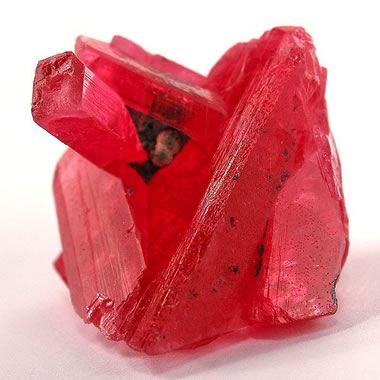
Image result for rhodonite
Monoclinic


10Image result for VAMPIRE COFFINImage result for VAMPIRE COFFINImage result for monoclinic Hexagonal crystal
Orthombic


6Image result for long boxImage result for long boxImage result for orthorhombic
Trigonal


10Image result for VAMPIRE COFFINImage result for VAMPIRE COFFINImage result for trigonal
Hexagonal


8Image result for Hexagonal crystalImage result for Hexagonal crystal
Cubic


6Image result for BOXImage result for BOXImage result for cubic
Tetragonal


12

Image result for CRYSTALImage result for CRYSTAL

Image result for tetragonal


Friday, March 8, 2019

PUPPET AND PLANS IN OUR DRAMA CLASS!

Hello readers this cold week in drama we have been sent to a group of 3 and had to come up with a group name my group and I came up with a group name which is J.A.M it's stand for Joshua, Alex and me Miguel and we had to come up with a message for everyone this is what we've wrote "Our message is we believe that the environment will remain tidy". We also had to create our own puppet we did not quite finished our puppet because we ran out of time.

Monday, March 4, 2019

HOME CHEMISTRY


The Plan

Task 1; Read the question carefully and write the answer to these questions.

  1. What do we need to find out? How much salt do we need to add in the water so it won't get frozen when we put in the freezer overnight.
  2. How will we find it out? We put some salt in the water and leave it overnight in the freezer.
  3. How will we record what we find? Put 3 half of cup of water in the freezer the first cup has no salt the next cup has half a tea spoon of salt and the third cup has a full 3 teaspoon of salt put the 3 cups in the freezer overnight and when you wake up u check the 3 cups which one stayed the same.
  4. What equipment do we need for the experiment? Beaker, water, measuring spoons or cups and salt.
  5. How long will it take? 9 hours overnight.


The Procedure

Task 2: What are the steps that you will take to make the experiment? 

List them in 6 steps.

Step 1; Gather all the equipment
Step 2: Put a half cup of water
Step 3: Put 3 teaspoon of salt on the water  wait 9 hours overnight
Step 4: Put the water in your freezer
Step 5:  Wait 9 hours overnight
Step 6: See if the experiment worked when you get out of bed


The Process

Task 3: Draw on a piece of A4 paper the 6 steps that you will use to test the amount of salt in water before freezing. When we are making drawings in science  it needs to be labelled clearly, kept tidy and named. Once you have completed the drawing it must be photographed and uploaded to your blog.

In your drawing you will use:
  1. Beakers
  2. Water
  3. Measuring spoons or cups
  4. Salt

The Process

Task 3: Draw on a piece of A4 paper the 6 steps that you will use to test the amount of salt in water before freezing. When we are making drawings in science  it needs to be labelled clearly, kept tidy and named. Once you have completed the drawing it must be photographed and uploaded to your blog.

In your drawing you will use:
  1. Beakers
  2. Water
  3. Measuring spoons or cups
  4. Salt


Skittles and rainbow paper experiment


SKITTLES
AIM: Separating the colour

Materials
W

1. A cup of water
2. 5 Skittles
3. Container


Process

Step 1. Spread out the 5 skittles inside the container

Step 2. Get a cup of water and put it in the container

Step 3. Wait for the colour to separate from the skittle

Findings

The colour slowly separated from the skittles and the colour went in the water. The colour were mixed together water.

Reflection

What did the colours do? The colour separated from the skittles.
Did the colours mix together? The colours mixed together in the water.
Why or why not? It mixed together because they were in the same container.


Aim: To separate colours by using the process of chromatography.


Definition: A technique for separating the different parts of a mixture / solid using liquid.


Related imageRelated imageImage result for chromatography


Rainbow paper

Materials;

1. Filter paper
2. Coloured pens
3. Cup 
4. Water


Process:

Step 1: Get a filter paper
Step 2: Put a line of dots using each coloured pens that you have
Step 3: Get a cup of water
Step 4: Hang the filter paper in the cup of water
Step 5: Wait for the colour to change while to goes up to the top of the paper


Findings: My partner and I saw how the colour changed while the filter paper was absorbing the water with the colour.

Reflection: I have learned that the filter paper can absorb the colour with the water.